
Hysterectomy Recovery Guide
Hysterectomy Recovery: An Honest Week-by-Week Guide
Most women are walking comfortably within a week of laparoscopic or robotic hysterectomy and back to desk work in two to three weeks. Open surgery takes roughly twice as long. This guide covers what each week actually feels like, the effects nobody warns you about, and when to call your doctor.
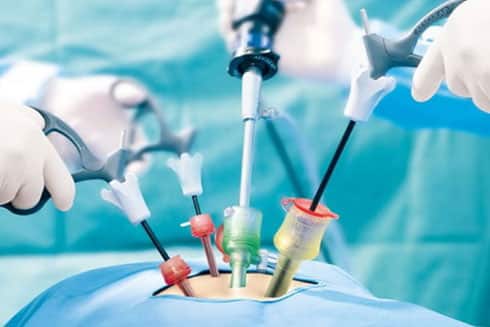
Before you read on
This guide applies whether or not I am your surgeon. If you are having your operation elsewhere, please use it anyway.
I have written it because most women are discharged with a printed sheet listing what not to lift, and almost nothing about what the weeks will actually feel like. The result is that entirely normal things — bloating, crying for no reason, a shoulder that aches — feel alarming, and women either worry unnecessarily or fail to call when something genuinely is wrong.
One thing to establish first: recovery depends far more on how the surgery was done than on the fact that it was done.
After laparoscopic or robotic hysterectomy: one to two days in hospital, comfortable walking within a week, desk work in two to three weeks.
After open abdominal hysterectomy: three to five days in hospital, six to eight weeks before returning to work.
Internal healing takes around three months either way. The outside heals long before the inside does — and that gap is where most problems happen.
Week by week
|
What is normal |
What is not |
What you can do |
|
|---|---|---|---|
|
Day 1–2 |
Pain controlled by medication. Getting out of bed and walking, usually same or next day. Wind pain. A urinary catheter for some hours. |
Uncontrolled pain, heavy bleeding, fever |
Walk short distances. Deep breathing. Take the painkillers |
|
Day 3–7 |
Home. Bloating and abdominal swelling. Shoulder-tip pain after keyhole surgery. Tiredness. Light bleeding or brown discharge |
Fever, increasing pain, foul discharge, calf pain |
Walk daily. Short stairs slowly. Rest often |
|
Week 2 |
Feeling noticeably better. Still tired by afternoon. Bleeding reducing |
Sudden increase in bleeding, wound redness or discharge |
Light housework. Still no lifting over 5kg. No driving |
|
Week 3–4 |
Energy returning. Desk work usually possible after keyhole surgery |
Persistent pain that is worsening rather than easing |
Gentle walking, longer distances. Driving once comfortable and off strong painkillers |
|
Week 5–6 |
Most daily activity comfortable. Some fatigue still normal |
New bleeding, new pain |
Follow-up review. Discuss intercourse and exercise |
|
Week 6–12 |
Returning to normal. Occasional twinges around the scar |
Deep pain, fever, unusual discharge |
Gradual return to exercise. Core work only once cleared |
The effects nobody warns you about
Shoulder pain. Common after keyhole surgery and genuinely bewildering if nobody has mentioned it. Gas is used to inflate the abdomen during laparoscopy, and some remains afterwards, irritating the diaphragm. The diaphragm shares nerve supply with the shoulder, so the brain interprets the signal as shoulder pain. It settles within a few days. Walking helps.
Bloating. Your abdomen may look larger after surgery than before it. This is swelling and fluid, not fat, and it can persist for several weeks. Women sometimes call it “swelly belly.” It resolves.
Bowel changes. Constipation is very common — anaesthesia slows the bowel, painkillers slow it further, and you are moving less. Ask about a stool softener before you leave hospital rather than struggling at home. Straining after abdominal surgery is uncomfortable and best avoided.
Overwhelming tiredness around days four to seven. You will feel better, do more, and be exhausted. This catches almost everyone.
Crying for no reason. Extremely common in the first fortnight, and rarely mentioned in advance. It is a combination of anaesthesia, disturbed sleep, painkillers, physical exhaustion and a genuinely significant life event. It passes. It does not mean you have made a mistake.
Strange sensations at the scar — numbness, tingling, tightness, occasional sharp twinges. Small nerves were cut and are regenerating. This can continue for months and is normal.
A feeling of emptiness. Some women describe a sense of loss that surprises them, even when they wanted the surgery and are glad the symptoms have gone. This is real, it is common, and it does not mean you regret the decision. It usually eases. If it does not, please say so — it is treatable and you should not sit with it quietly.
Will I gain weight? Will my stomach look different?
A hysterectomy does not cause weight gain. Removing the uterus does not alter your metabolism.
What does happen is this. You are considerably less active for several weeks. Appetite often continues as normal. Fluid retention and swelling add apparent bulk in the early weeks. And if your ovaries were also removed, the hormonal change can affect where the body distributes fat.
So some women do gain weight after hysterectomy — but through reduced activity during recovery, not through the operation itself. Women who return to their normal activity level usually find their weight returns to where it was.
On the appearance of your abdomen: post-operative swelling can last several weeks to a few months. Abdominal muscle tone also takes time to return, having been unused. Both improve. Do not judge your abdomen at week three.
Please do not start dieting during recovery. Your body is healing tissue and needs protein and adequate nutrition. Address weight after the six-week review, not before.
Menopause — only if your ovaries came out
Ovaries preserved: they continue producing hormones exactly as before. You will not have periods, because there is no uterine lining to shed, but you are not in menopause. Some evidence suggests natural menopause may arrive slightly earlier than it otherwise would.
Ovaries removed: menopause begins immediately, and because it is sudden rather than gradual, symptoms are often more intense than natural menopause. Hot flushes, night sweats, mood changes and vaginal dryness can begin within days.
If your ovaries are being removed, this conversation must happen before surgery, not after. Ask whether hormone replacement is appropriate for you, and have the plan in place beforehand. Being handed sudden surgical menopause with no preparation is avoidable, and it happens far too often.
If you are unsure what was removed, ask. It should be in your operation notes and you are entitled to know.
Sex after hysterectomy
When? Usually after six weeks, once the vaginal vault has healed and it has been confirmed at your follow-up. This is not an arbitrary rule. There is an internal suture line at the top of the vagina that you cannot see, and it needs time. Resuming early risks bleeding and disrupting that healing.
Will it be different? Most women report sexual function unchanged or improved — largely because the pain, bleeding and exhaustion that led to surgery are gone, and because there is no longer any anxiety about pregnancy.
A minority notice changes in sensation. The cervix contributes to sensation for some women, so its removal can be noticed. If the ovaries were removed, hormonal change can cause dryness and reduced desire.
If it is uncomfortable: dryness is common and easily managed with lubricant, and a local oestrogen preparation may be appropriate if the ovaries were removed. Go slowly at first. And please tell me if there is pain — pain that persists is not something to accept, and it is nearly always treatable.
Going back to work
This is where the surgical approach makes the greatest practical difference to your life.
Desk work: two to three weeks after keyhole or robotic surgery. Six weeks or more after open surgery. Work involving standing, lifting or travel: longer, and be honest with your employer about it.
Consider a phased return if you can. Many women manage half days in week three and full days by week four after keyhole surgery, where a full return on day fifteen would have been too much.
That difference — roughly a month of your life — is the real reason minimally invasive surgery matters. Not the technology, and not the size of the scars. The month.
Read more: Robotic, laparoscopic or open — what actually differs
For husbands and family
This section is written for whoever is reading over her shoulder.
The first two weeks are when help is actually needed. Lifting, driving, shopping, children, cooking, cleaning. She will not ask. Do not offer — just do it.
Do not ask her repeatedly whether she is better yet. She will tell you. Being asked daily makes her feel she is recovering too slowly.
She may cry, or be irritable, for no clear reason. This is normal in the first fortnight. Do not take it personally, and please do not tell her to be strong. She is being strong.
Six weeks without intercourse is a medical requirement, not a preference. There is an internal wound that has to heal.
Watch for the warning signs listed below, because she may minimise them. Women routinely under-report fever and pain, particularly when they feel they are being a burden.
And after two weeks, if she is not improving — if she is still exhausted, low, or in pain that is not easing — take her back to the doctor rather than waiting for the six-week appointment.
Red flags — call immediately
Please do not wait for your scheduled follow-up if any of these occur:
- Fever above 100.4°F (38°C)
- Heavy vaginal bleeding — soaking a pad, or passing large clots
- Foul-smelling discharge
- Pain that is worsening rather than easing, or pain not controlled by your medication
- Redness, swelling, warmth or discharge at an incision
- Calf pain, swelling or tenderness in one leg — this needs assessment the same day
- Chest pain or breathlessness — go to hospital immediately
- Difficulty passing urine, or pain on passing urine
- Persistent vomiting, or an abdomen that is swelling and hard
Calling and being told all is well is a perfectly good outcome. Please always call.
Practical things that help
Support your abdomen with a pillow when you cough, sneeze or laugh for the first two weeks. It makes a surprising difference.
Set up a recovery spot — a chair you can get out of easily, everything within reach. Getting up from a low soft sofa is harder than you expect.
Loose, high-waisted clothing. Nothing with a waistband sitting on an incision.
Walk every single day, from day one. Short and frequent beats long and occasional. It reduces the risk of clots, moves the trapped gas, and helps the bowel.
Take the painkillers as prescribed. Waiting until the pain is bad means chasing it. Enduring pain does not speed healing — it slows it, because you move less.
Accept help. Genuinely. This is the one I have to repeat most often.