
Do you need hysterectomy ? 2nd opinion
Do You Really Need a Hysterectomy?
Not every woman advised a hysterectomy needs one. For fibroids, adenomyosis, heavy bleeding and prolapse, there are usually two to four alternatives that preserve the uterus. This page explains how that decision should be made, what genuinely requires surgery, and what to ask before you consent.
First — you are allowed to ask questions
Most women who come to me for a second opinion begin by apologising.
They say sorry for taking up my time. Sorry for doubting their doctor. Sorry for asking. One woman told me she had booked the appointment without telling her husband, because she felt she was being difficult.
I want to say this clearly before anything else on this page: taking a second opinion before major surgery is not disloyalty, and it is not rudeness. It is what people do everywhere in the world before an operation that cannot be undone. No competent doctor is offended by it. I am not offended when my own patients take one, and I have occasionally suggested it myself.
A hysterectomy is permanent. Once the uterus is removed, there is no version of the future in which you change your mind. A decision that final deserves to be examined properly — not rushed through in a seven-minute consultation while someone waits outside.
You do not need to inform the doctor who advised the surgery. You do not need a referral. You just need your reports.
Why is hysterectomy advised more often than it is needed?
I am not going to suggest that surgeons are acting in bad faith. In my experience that is rarely what is happening. What happens is usually more ordinary than that, and there are four common reasons.
The consultation is short. Explaining four treatment options, their trade-offs and their failure rates takes twenty-five minutes. Advising surgery takes four. In a busy OPD with thirty women waiting, the shorter conversation wins more often than anyone would like to admit.
Surgery is definitive and medicine is not. If I give you tablets, you may return in three months no better, and we start again. If I remove the uterus, the bleeding stops permanently. For a doctor managing a heavy caseload, certainty is genuinely appealing. That does not make it right for you.
“You have had your children” is treated as a reason. It is not. It is the removal of one reason to preserve the uterus, which is not the same thing as a reason to remove it. I have written more about this below.
The alternatives were never fully tried. This is the one I see most often. A woman is given one tablet, takes it for two months, does not improve, and is advised surgery. But there are five or six steps on the treatment ladder for heavy bleeding, and she climbed one of them.
When a hysterectomy is genuinely necessary
Cancer of the uterus, cervix or ovary, or a strong suspicion of it. This is not a decision to think about for a few weeks. If there is a suspicion of malignancy, act quickly.
Uncontrolled bleeding after childbirth. An emergency decision made to save a life, in circumstances where there is no time for discussion.
Severe prolapse where the uterus is substantially outside the body, particularly where a pessary has failed or is unsuitable — although even here, uterus-preserving repair is sometimes possible and should be discussed.
Diffuse adenomyosis that has not responded to anything else, in a woman who has completed her family. If adenomyosis has spread throughout the uterine muscle, there is no way to remove it and leave the uterus behind. When medication and a hormonal IUD have genuinely been tried and failed, hysterectomy is the definitive answer and I will say so.
Bleeding that has failed the full treatment ladder — not one tablet, but the whole sequence and is causing anaemia that will not correct.
If your situation is one of these, a second opinion will most likely confirm what you have already been told. That is a useful outcome too. You then proceed with confidence instead of doubt, and confidence matters more before surgery than people realise.
When alternatives exist
This is where most of my second opinions land.
Fibroids
Most fibroids never need surgery at all, and where they do, removing the fibroid alone is often possible. What decides it is not size — it is where the fibroid sits, what symptoms it causes, and whether you want a pregnancy.
A nine-centimetre fibroid on the outer wall of the uterus causing no symptoms may need nothing but an annual scan. A two-centimetre fibroid inside the uterine cavity can cause bleeding heavy enough to drop your haemoglobin to seven, and needs removal — usually through a day-case hysteroscopic procedure with no cuts on the abdomen at all.
Options before hysterectomy: watchful waiting, medication, a hormonal IUD, hysteroscopic resection, myomectomy, and uterine artery embolisation.
Adenomyosis
Here I will be honest with you, because pretending otherwise would not help. For focal adenomyosis — where it sits in one area — surgical excision preserving the uterus is often possible. For diffuse adenomyosis spread through the whole muscle wall, there is currently no way to remove the disease and keep the uterus.
But symptoms can frequently be controlled for years without surgery, using medication or a hormonal IUD. And because adenomyosis is driven by oestrogen, it improves substantially after menopause. If you are forty-eight and manageable on treatment, waiting is a legitimate strategy rather than a delay tactic.
Heavy bleeding without a structural cause
This is where surgery is most often avoidable and most often advised anyway. There is a whole ladder here — tranexamic acid, anti-inflammatories, hormonal treatment, a hormonal IUD, hysteroscopic removal of a polyp, endometrial ablation — and a great many women never get past the first rung before someone suggests removing the uterus.
Prolapse
The uterus itself is not diseased in prolapse. What has weakened is the support beneath it. Logically, then, the treatment should be to repair the support.
Pelvic floor physiotherapy works well in the earlier stages. A pessary — a soft silicone ring that supports the uterus from inside, fitted in fifteen minutes in the clinic without anaesthesia — allows many women to live comfortably for years. And where surgery is needed, uterus-preserving repair is possible in a good number of cases.
The comparison
| Condition | Alternatives before hysterectomy | Best suited to | Less suitable when |
| Fibroids | Watchful waiting, medication, hormonal IUD, hysteroscopic resection, myomectomy, embolisation | Fibroids outside the cavity; women wanting future pregnancy | Very large or numerous fibroids; severe anaemia not correcting |
| Adenomyosis | Medication, hormonal IUD, focal excision | Focal disease; symptoms controlled on treatment; approaching menopause | Diffuse disease, family complete, everything tried and failed |
| Heavy bleeding | Tranexamic acid, hormonal treatment, hormonal IUD, hysteroscopy, ablation | Most women — this ladder is genuinely effective | Suspected malignancy; failed the full ladder |
| Prolapse | Pelvic floor physiotherapy, pessary, uterus-preserving repair | Earlier stages; women who prefer to avoid surgery | Very advanced prolapse; other uterine pathology present |
Seven questions to ask the doctor who advised surgery
Write these down and take them with you. Any good surgeon can answer all seven, because a surgeon who has thought properly about your case has already asked themselves the same things.
1. Exactly what are you removing? The uterus alone? The cervix as well? The ovaries? These are different operations with different consequences. Removing the ovaries in a woman who has not yet reached menopause causes immediate surgical menopause, which is a significant thing to happen without having discussed it beforehand.
2. What happens if I wait six months? Unless there is a suspicion of cancer, severe anaemia or acute bleeding, the answer in most benign conditions is: very little. If the doctor becomes irritated by this question rather than answering it, that reaction tells you something.
3. Which alternatives did you consider, and why did you rule them out? This is the most important question on the list. Every surgeon who has genuinely thought about your case can name two or three options they considered and explain why they set them aside. A surgeon who cannot have not been thinking about your case specifically.
4. What exactly have I already tried, and for how long? Go through it honestly. One tablet for two months is not a failed trial of medical management. It is the first rung of a six-rung ladder.
5. Can this be done by keyhole surgery, and if not, why not? There are genuinely good reasons for open surgery — very large fibroids, dense adhesions from previous operations, suspected malignancy. But you should hear the reason rather than simply be told the route.
6. How many of these operations do you do in a year? This is a fair question and you are entitled to ask it of anybody, including me. Volume matters in surgery, particularly for the more technically demanding operations like laparoscopic myomectomy.
7. What are the risks, specifically for me? Not the general risks printed on a consent form. Yours — given your weight, your previous surgeries, your anaemia, your other conditions.
What a second opinion with me actually involves
I would rather you knew exactly what to expect, because uncertainty puts women off booking.
Bring: all sonography and MRI reports, and the actual images — the films or the CD, not only the typed report. The images frequently tell me more than the report does. Bring any biopsy or histopathology reports, your recent blood tests including haemoglobin and ferritin, and a written list of every medication you have tried, the dose, and how long you took it before stopping.
Also bring: a note of your symptoms in specific terms. How many pads a day. How large the clots are. How many days the bleeding lasts. What you have had to stop doing because of it. This is far more useful to me than “bahut zyada hota hai.”
Expect the consultation to take time. I will examine you, go through the images myself, and explain what I think and why.
I may agree with the first doctor. This happens frequently and it is a good outcome, not a wasted appointment. You will then go into surgery understanding why it is necessary, which genuinely affects how well women recover.
I may disagree, in which case I will explain what I would do instead and why — and you are free to take that back to your original doctor. Many women do. That is entirely fine.
You are not obliged to have surgery with me. A second opinion is an opinion. What you do with it is yours.
If surgery is the right answer, the approach still matters
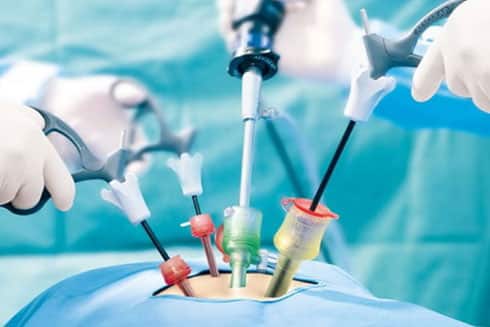
There are three routes — open surgery through a ten to fifteen centimetre incision, laparoscopic keyhole surgery through several small incisions, and robotic-assisted laparoscopy where the surgeon operates from a console controlling instruments that articulate more precisely than the human wrist inside a confined space.
The difference that matters to you is not the technology. It is time.
After keyhole or robotic surgery, most women manage daily activities within one to two weeks and return to desk work in two to three. After open surgery, six to eight weeks is usual. That is roughly a month of your life, and for a working woman, a woman with small children, or a woman caring for elderly parents, a month is not a small thing.
Not every case can be done by keyhole surgery, and any surgeon who tells you otherwise is overselling. But you should know which route is being proposed for you, and why.
Read more: Robotic, laparoscopic or open surgery — what actually differs
Recovery, honestly
Read more: Hysterectomy recovery — an honest week-by-week guide
Frequently Asked Questions
Is it wrong to take a second opinion?
What should I bring to a second opinion consultation?
Bring all sonography and MRI reports with the actual images, any biopsy or histopathology reports, recent blood tests including haemoglobin, a list of medications tried and for how long, and a note of your symptoms. Original images matter more than the typed report.